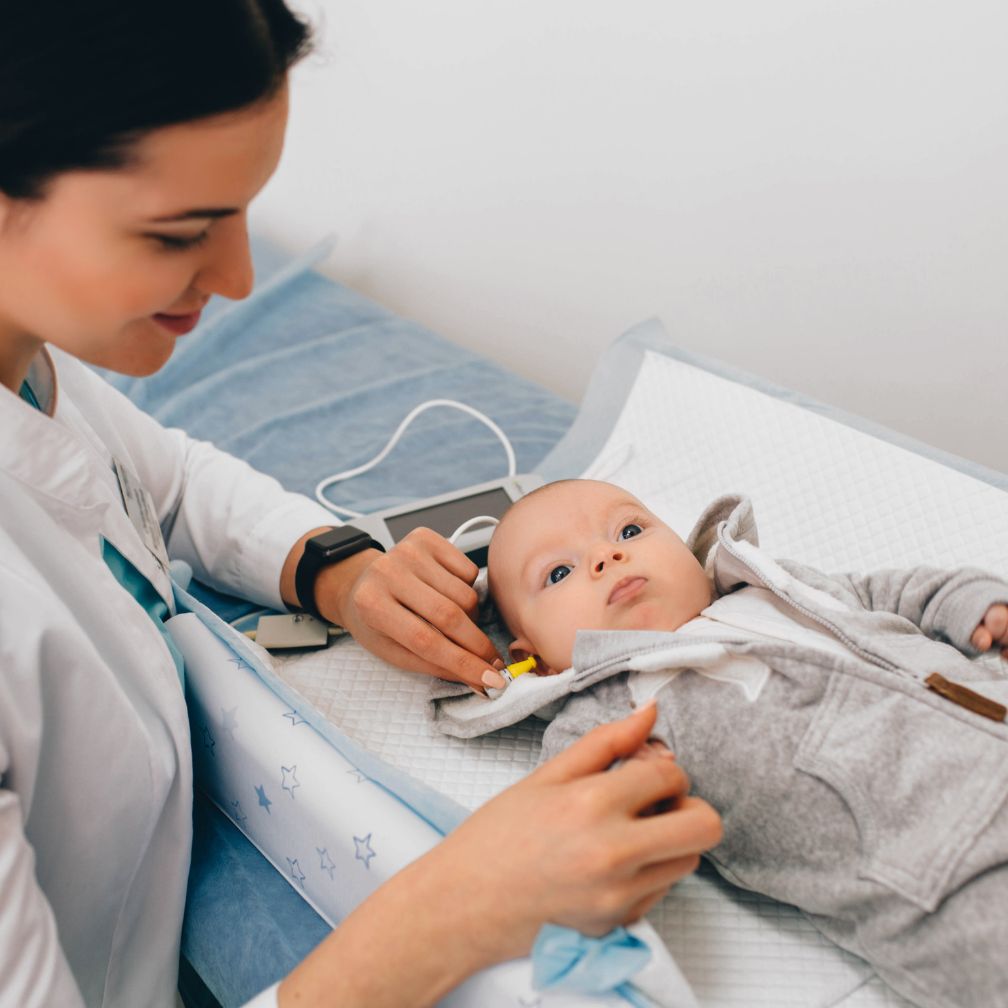
For parents bringing home a newborn, understanding that their baby exhibits auditory deficits tends to spark heavy emotional dread. Fortunately, the reassuring perspective dictates that through timely checks and early help, babies with hearing issues will achieve great success. Clearly, such children consistently gain core language skills, social capabilities, and firm bonds with people in their lives, building toward a prosperous life!
Two of the primary supportive devices for assisting infants with hearing loss include custom hearing aids and cochlear implants. Down below, we investigate their mechanisms of action to help you decide which option best serves your youngster.
Exploring Causes of Auditory Loss in Infants
Auditory loss in newborn babies can trace back to multiple potential origins, including:
- Hereditary genetic markers (even when devoid of any documented parental history)
- Severe perinatal infectious diseases like cytomegalovirus (CMV) or rubella transmission
- Unexpected labor complications, including perinatal hypoxia or early delivery
- Specific therapeutic drugs given inside specialized newborn intensive units
What constitutes the single most vital measure? Swift clinical diagnosis. This critical mandate clarifies why infants across the United States undergo auditory checks prior to leaving the birth facility. Board-certified pediatric audiologists strictly uphold the recognized “1-3-6” care benchmark:
- Baseline screening performed before 1 month of life
- Formal comprehensive diagnosis finalized inside 90 days of life
- Clinical intervention (utilizing hearing aids or therapy) initiated prior to 180 days of life
Achieving these critical milestones provides infants their ideal path toward speech, language, and cognitive development. If you need guidance concerning these newborn checks, your primary pediatrician stands ready to assist you!
Pediatric Hearing Aids for Young Babies
In cases where babies exhibit mild to severe hearing challenges, pediatric hearing aids typically serve as the frontline remedy. Such light, wearable units intensify sound signals, helping infants distinguish human speech and natural sounds more clearly.
Certified pediatric-grade hearing devices stand as:
- Highly safe for fitting on young babies only several weeks post-birth
- Designed with soft, non-irritating ear inserts that get updated throughout early childhood development
- Outfitted with child-proof battery covers plus specialized safety features geared toward babies
- Individually configured by a trained pediatric audiology specialist to align with your baby’s exact hearing needs
While your child matures, their hearing devices necessitate routine recalibration to preserve physical comfort and functional efficacy.
Pediatric Cochlear Implants: An Advanced Solution
When an infant presents with severe to profound sensorineural loss and derives insufficient benefit from wearable aids, a cochlear device can be prescribed. Differing fundamentally from conventional amplification tools, cochlear implant systems:
- Are fitted directly inside the inner ear via surgery to directly stimulate the auditory nerve
- Successfully bypass non-working components within the inner ear
- Process incoming sound into refined electrical impulses that stimulate the auditory nerve directly
Cochlear implants are:
- Fully approved by the FDA for pediatric patients starting at 9-12 months of age
- Extremely effective when paired with early habilitation programs and strong parental involvement
- Advised strictly following rigorous joint evaluations by a certified audiologist and otolaryngologist
This process includes radiological imaging, specialized auditory testing, and open dialogue concerning long-term communicative results.
Hearing Aids vs. Cochlear Implants: What’s the Difference?
- Mild to severe hearing challenges suit Hearing Aids; Severe to profound auditory destruction warrants Cochlear Implants
- Non-Invasive external placement: Hearing Aids; Surgical insertion required: Cochlear Implants
- Traditional acoustic amplification: Hearing Aids; Electrical signal stream conversion: Cochlear Implants
- Application starts during early infancy: Hearing Aids; Surgery can begin at 9-12 months: Cochlear Implants
Summary Thoughts: Supporting Your Child’s Hearing Journey
Should your baby receive a formal hearing loss diagnosis, rest assured that clear options and robust community resources exist to help you. Thanks to collaboration with dedicated pediatric audiologists, numerous children grow to master speech and language milestones fully matching their playmates.
Regardless of whether your baby requires wearable hearing aids or a surgical cochlear implant, taking immediate action produces a lifelong positive impact.
Are you looking for clarity regarding your infant’s hearing development? Contact our clinical team today for a full evaluation and personalized care plan.