When your hearing feels obstructed, it can impact your daily schedule and leave you feeling withdrawn from your environment. It is typical to presume that muffled sound signifies long-term hearing deficiency, but the issue is often just a resolvable cerumen obstruction.
Differentiating between a cerumen blockage and actual hearing impairment is crucial for identifying if you need a simple cleaning or a formal diagnostic exam. Avoid the urge to fret if your hearing feels abruptly reduced. While only an audiologist can verify the cause, reviewing these essential markers of wax vs. auditory decline can provide immediate insight.
Recognizing Cerumen Blockage Symptoms
Your canals produce wax as a natural defense process to preserve integrity and keep debris away from the eardrum. The difficulty starts when this substance accumulates to the level of a tangible blockage.
Symptoms of a clog often include:
- Muted sound quality that manifests over time or overnight
- A feeling of canal fullness or a “clogged” feeling
- Overall ear discomfort or minor aching
- Internal ringing within the impacted ear
- Moments of sharper hearing following a jaw stretch or chewing
Earwax-related hearing problems are often asymmetrical, affecting one ear rather than the other. Fortunately, once surplus wax is professionally extracted, hearing often reverts to normal instantly.
How Hearing Impairment Typically Presents
Unlike a brief blockage, sensorineural hearing impairment usually advances slowly over years and is not resolved by clearing the canal.
Signs of actual hearing loss may include:
- Issues with word clarity in busy or loud settings
- Often requiring clarification during normal dialogue
- Setting media volumes to a level that people find too loud
- Trouble detecting high-frequency tones
- Two-sided hearing shifts that affect both ear canals simultaneously
Contrasted with cerumen impaction, auditory impairment doesn’t typically cause a feeling of blockage or pressure.
Primary Distinctions at a Glance
By looking at the onset and specific symptoms, you can often determine which issue is impacting you:
- Timeline: Cerumen muffling can be quick, but permanent loss takes years
- Reversibility: Wax-related hearing changes are typically brief; auditory impairment is frequently permanent
- Feelings: Physical “clogging” leads to wax, while the struggle to clarify sounds points to loss
- Asymmetry: Wax often affects a single ear; auditory impairment frequently affects each
Reasons Not to Self-Diagnose
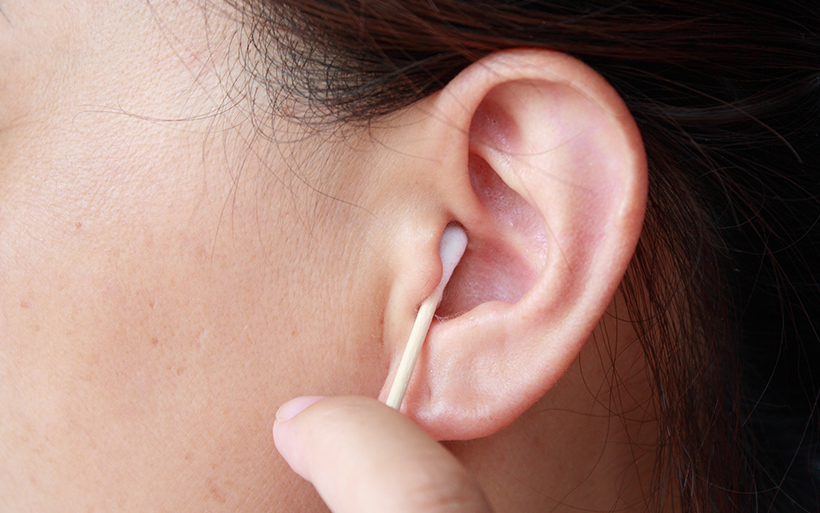
When hearing feels muffled, the instinctive desire is to use a Q-tip, but this is frequently a dangerous move. In reality, physical poking often compresses the wax further against the eardrum, making the impaction worse.
Medical data shows that DIY removal often results in accidental damage or more difficult-to-treat blockages.
Delaying a professional evaluation for real impairment can result in missing out on solutions that shield your long-term mental and social health.
Ways a Professional Exam Helps
A brief professional exam is the primary way to confirm if wax is actually the source of your dull hearing.
When wax is the issue, clinical flushing or manual removal provides immediate resolution.
Should the auditory canal be unobstructed but auditory struggles continue, a hearing test can evaluate whether hearing loss is present and identify its category and severity.
Health experts suggest seeking a professional opinion as promptly as you notice hearing fluctuations that affect your lifestyle.
Final Thoughts on Earwax and Hearing Health
Muted auditory quality is not a definitive marker of long-term impairment.
Frequently, the problem is merely a collection of wax that can be quickly cleared.
Obtaining professional attention guarantees you locate the exact source and the proper remedy for your hearing requirements.
Keep in mind that self-diagnosis is hardly a replacement for a clinical check-up when it pertains to your hearing.
Finding clarity promptly can avert unnecessary stress and guarantee you receive the appropriate care at the right time.
If you’ve observed a shift in your hearing, call our clinic for a formal evaluation today.